Introduction to the Ride Simulator
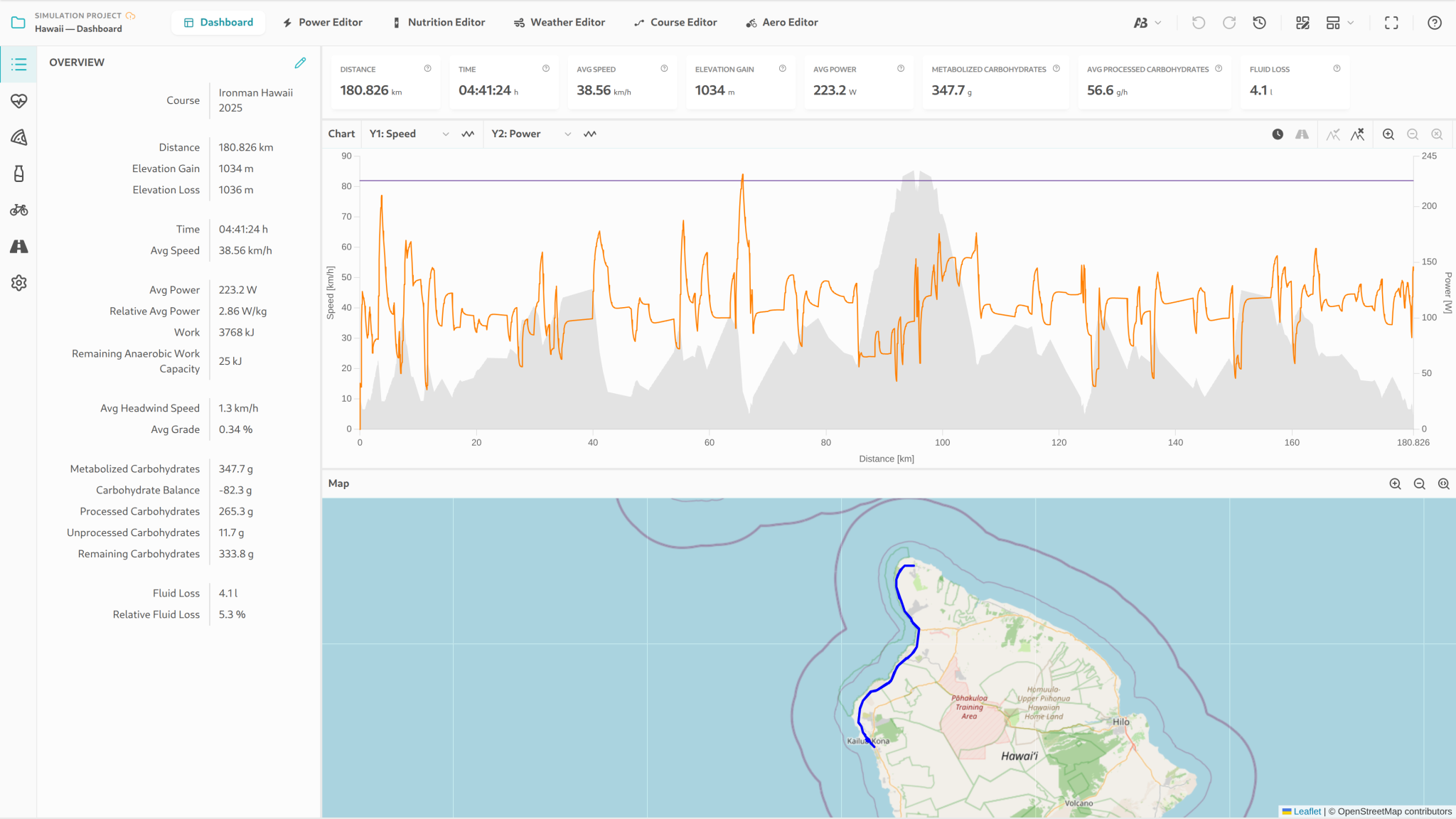
The Ride Simulator is a simulation environment for cycling that combines physics-based models with rider-specific physiological data. From power output, aerodynamics, gradient, rolling resistance, body metrics, and metabolic parameters, it computes realistic speed profiles and carbohydrate usage in near real time.
Why Use a Simulator?
A performance test provides valuable data about your physiology – but the true benefit only emerges when you translate that data into actionable strategies for training and racing. The Ride Simulator bridges exactly this gap: it transforms analysis results from your AI DIAGNOSTICS performance diagnostics into concrete race-day plans.
Typical use cases include:
- Race preparation: Simulate your planned race course with real elevation and weather data to find the optimal power distribution.
- Pacing optimization: Discover how different power distributions affect your overall time and energy expenditure.
- Nutrition and hydration planning: Plan carbohydrate intake and fluid consumption based on your individual metabolism and course conditions.
- Equipment decisions: Compare the time impact of different wheels, riding positions, or bike types using A/B scenarios.
- Understanding physiological limits: See how VO2max, VLamax, and anaerobic capacity constrain your performance at different intensities.
Key Capabilities at a Glance
The Ride Simulator offers a comprehensive set of tools for race planning and performance analysis:
- Physics-based speed computation: Determines the realistic speed at every point along the course by balancing input power against all resistance forces.
- Course modeling: Import real courses (GPX/TCX/FIT) with elevation profiles and GPS coordinates for map visualization.
- Weather integration: Automatically load historical or forecast weather data for GPS-enabled courses.
- Nutrition planning: Use an extensive database of real sports nutrition products with modeled carbohydrate absorption.
- Fluid and sodium tracking: Plan fluid intake based on sweat rate and monitor sodium balance.
- AI DIAGNOSTICS analysis import: Import your physiology data for personalized demand calculations.
- A/B scenario comparison: Compare two strategies side by side and see time differences directly.
- Project sharing and management: Save, share, and manage your simulation projects.
Who Is the Simulator For?
The Ride Simulator is designed for athletes, coaches, and performance analysts who want to make data-driven decisions for training and racing. It is particularly valuable for:
- Triathlon: Plan bike legs with specific nutrition and pacing strategies while preserving energy reserves for the subsequent run.
- Time trials: Optimize riding position, aerodynamics, and power distribution for maximum speed.
- Road racing: Simulate key moments in a race and plan energy distribution across the full distance.
Explore Further
The following pages cover each feature area in detail, helping you get the most out of the simulator:
- Interface and Project Management – Dashboard layout, project management, and A/B comparison.
- Course and Weather – Course import, map visualization, and weather conditions.
- Power and Aerodynamics – Power editor, drafting models, and equipment.
- Nutrition and Hydration – Nutrition planning, product database, and fluid management.
- Importing Analysis Data – How to use your AI DIAGNOSTICS analysis in the simulator.
- Physics and Methods – Scientific foundations and calculation models.